
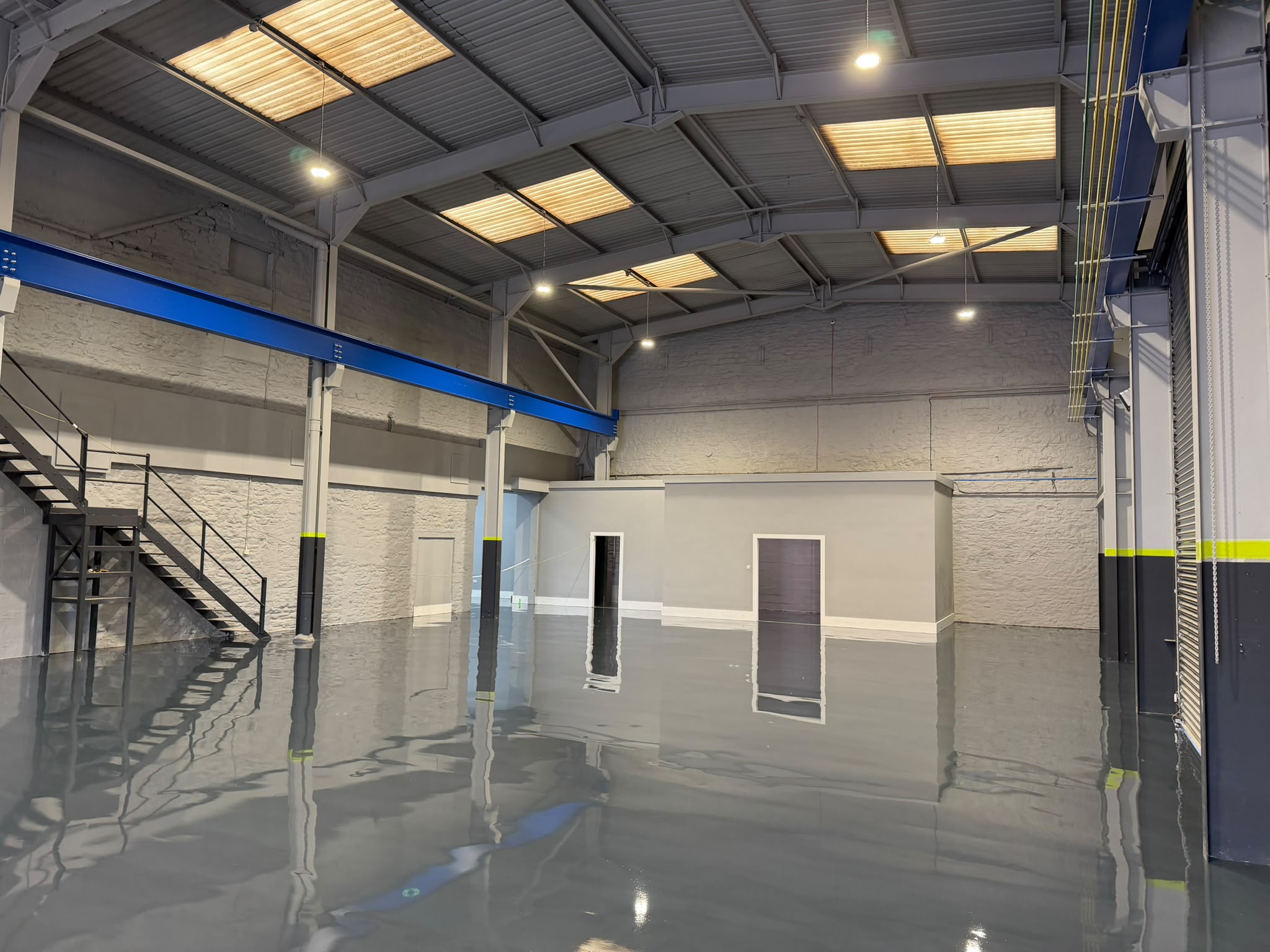
Choosing the right flooring for an industrial or commercial environment is about far more than appearance. Floors in these settings need to withstand heavy footfall, machinery, spills, chemicals and constant cleaning, all while remaining safe and looking presentable. Epoxy resin flooring has become one of the most widely used solutions across the UK for exactly this reason. This guide explains what epoxy resin flooring is, why it works so well, and how to choose the right system for your space.
What Is Epoxy Resin Flooring?
Epoxy resin flooring is a type of synthetic flooring system created by combining epoxy resin with a hardening agent, which chemically react to form a rigid, plastic like coating. Once cured, this coating bonds tightly to a concrete substrate, creating a smooth, seamless and highly durable surface. Because the resin acts as a protective layer over the concrete beneath, it shields the underlying floor from wear, moisture, chemical damage and general degradation over time.
Epoxy flooring generally falls into a few broad categories, including water dispersed systems, solvent containing systems and solvent free systems, each offering a slightly different balance of performance, application method and environmental impact.
Why Businesses Choose Epoxy Resin Flooring
There are several reasons epoxy resin has become the go to flooring solution across so many different industries.
- Exceptional durability. A properly installed epoxy floor can withstand heavy foot traffic, forklift movement and dropped tools without cracking or wearing away.
- Chemical resistance. Epoxy coatings resist damage from oils, solvents, cleaning chemicals and other substances commonly found in industrial settings.
- Easy to clean and maintain. The seamless, non porous surface prevents dirt, bacteria and liquids from penetrating the floor, making cleaning quick and straightforward.
- Long term cost effectiveness. While installation involves an upfront cost, the durability and low maintenance requirements of epoxy flooring often make it more economical over its lifespan than repeatedly repairing or replacing other flooring types.
- Enhanced safety. Anti slip additives and high visibility colour options can be incorporated to improve safety in busy or hazardous environments.
Where Is Epoxy Resin Flooring Used?
Thanks to its versatility, epoxy resin flooring is suitable for a wide variety of settings, including:
- Food manufacturing facilities and commercial kitchens, where hygiene and resistance to steam cleaning are essential
- Warehouses and distribution centres, where heavy loads and constant vehicle movement demand a tough, long lasting surface
- Healthcare and hospital environments, where cleanliness and infection control are critical
- Engineering and manufacturing plants exposed to oils, chemicals and mechanical stress
- Retail spaces, where a smart, seamless finish contributes to the overall look and feel of a store
- Domestic garages, where homeowners increasingly choose epoxy for its durability and easy to clean surface
Understanding the Different Types of Epoxy Systems
Not all epoxy resin flooring is the same, and systems are generally classified according to thickness and application method, ranging from light duty coatings applied in thin layers through to heavy duty, trowel applied screeds designed for the most demanding environments. Some systems are self smoothing, offering a flat, seamless finish, while others incorporate aggregate for additional texture and slip resistance. Choosing the correct system depends on factors such as expected foot and vehicle traffic, exposure to chemicals, and the specific hygiene or safety standards required for the space.
The Importance of Floor Preparation
The long term performance of any epoxy resin floor depends heavily on how well the substrate is prepared before installation. Without proper preparation, even the highest quality resin can fail to bond correctly, leading to premature wear or coating failure. Common preparation methods include:
- Shot blasting, which removes surface contaminants and creates a suitable profile for the resin to bond to
- Diamond grinding, used to smooth uneven surfaces and remove old coatings
- Scabbling or planing, often used on more heavily damaged or uneven concrete
- Hot compressed air systems, used in specific circumstances to prepare surfaces where other methods are less suitable
Taking the time to prepare a substrate correctly is one of the most important factors in ensuring a resin floor performs well and lasts for years to come.
Hygiene and Food Safety Considerations
For businesses operating in food production, catering or commercial kitchen environments, flooring needs to do more than simply look clean. It needs to withstand frequent steam cleaning, pressure washing and exposure to fats, oils and cleaning chemicals, all while maintaining a hygienic, seamless surface with no joints or gaps where bacteria could accumulate. Resin flooring systems designed for these environments are often tested and approved by recognised food industry research bodies, giving businesses confidence that their flooring meets the hygiene standards their industry demands.
Sustainability in Resin Flooring
Sustainability has become an increasingly important consideration for businesses investing in new flooring. Many modern resin systems are formulated to be low emission, reducing the release of volatile organic compounds during and after installation. Choosing a durable, long lasting flooring solution also has an inherent sustainability benefit, since a floor that lasts significantly longer than alternative options reduces the need for frequent replacement, material waste and repeated disruption to business operations.
Getting the Right System for Your Space
With so many resin flooring options available, getting expert advice before committing to a system is essential. A reputable epoxy resin flooring specialist will typically offer a free site survey and specification, assessing factors such as expected traffic levels, chemical exposure, hygiene requirements and desired finish before recommending the most suitable system. This kind of tailored approach helps ensure the finished floor performs well for years, rather than needing costly remedial work further down the line.
Final Thoughts
Epoxy resin flooring offers a genuinely versatile, durable and hygienic solution for a huge range of industrial, commercial and even domestic spaces. From food manufacturing facilities to warehouses, hospitals and home garages, the right system can transform a space into one that is safer, easier to maintain and built to last. Taking the time to understand the different types of resin flooring available, along with the importance of proper preparation, will help ensure any new flooring investment delivers real value for years to come.
